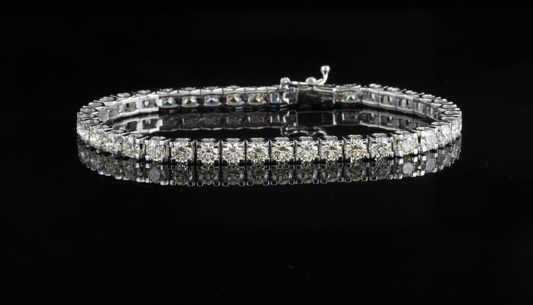
Does D-Color Moissanite actually look too bright to be a real diamond?
If you love high-quality streetwear jewelry in Australia, you've seen D-colour moissanite. It looks almost "blinding" in the sun.
This shine can look like pure luxury. But it also makes people question moissanite vs real diamond when the light hits hard.

First, a quick baseline: moissanite is its own gemstone, made from silicon carbide.
It was first identified in 1893 by Dr. Henri Moissan. He studied tiny crystals found in crater rock samples in Arizona.
Because natural moissanite is extremely rare, most stones used in jewelry today are lab-created. This ensures consistent quality.
Moissanite is often marketed as a diamond alternative. It looks close to diamond and handles light in a similar way.
The Gemological Institute of America has even described it as the closest diamond imitation. This explains why VVS1 D-Color moissanite is now a common pick for statement chains and rings.
So why does the “too bright” question come up so often?
In simple terms, moissanite and diamond don't return light the same way. Diamonds are known for crisp sparkle, while moissanite can throw stronger rainbow flashes.
This difference can be more obvious in harsh daylight, club spotlights, or anywhere you get maximum brilliance under light.
This matters even more when you're chasing a pure and colorless gemstone look. The wrong kind of flash can look a bit “too perfect” up close.
In the sections ahead, we'll break down what your eye is really catching. We'll look at how size and lighting change the read. And we'll explore what “diamond tester approved” can mean in real life.
We'll also look at how IceCoast_CO builds street-ready pieces. They feel substantial and stay clean on skin, without cheap plating or that quick fade you see in budget jewelry.
Why D-Colour Moissanite can look “too bright” in real life lighting
D-Colour moissanite is designed to appear as a pure and colorless gemstone. This can make it seem intense in harsh lighting. The "too bright" look often comes from the coloured sparkle pattern, not because it looks cheap.
When comparing moissanite to real diamonds, the setting is just as important as the stone. Places like clubs, festivals, gyms, carparks, and the Australian sun can make the shine more noticeable than indoor lighting. This is why the same chain can look different in different settings.
maximum brilliance under light refers to how much white light is reflected back to your eye. The quality of the cut is key: a well-cut stone reflects light cleanly, while a poorly cut one leaks light and can appear flat.
Fire, or the split of light into colours, creates the rainbow flickers people notice first. Diamonds often show strong white sparkle with a tighter, more controlled fire. Moissanite, on the other hand, can display bolder colours in the same conditions.

Moissanite's double refractive nature can make some facet edges seem doubled. This can make the "crisp" outline of a diamond appear fuzzy at close range, even under bright LEDs.
The "disco-ball" effect is about speed and contrast. Under spotlights or full sun, moissanite can flash quick rainbow bursts. These bursts can be more noticeable than diamond flashes, making moissanite stand out in photos and on the move.
Stone size also plays a role. Larger stones can make the coloured flashes more visible. This can change the overall look from subtle to loud.
- Smaller stones tend to keep the sparkle tighter for a daily streetwear look.
- Larger stones can look louder under sunlight and venue lighting, which suits premium fashion statements.
It's important to separate optics from testing. Even if a stone passes diamond test pens with ease, this doesn't mean it will sparkle like a diamond in every lighting setup.
VVS1 D-Color Moissanite, high-quality streetwear jewelry
Streetwear jewelry should be bold, not flimsy. VVS1 D-Color Moissanite gives an icy look that moves with you. It's perfect for everyday wear, not just special occasions.

In jewelry like a D-Color moissanite chain or an iced-out tennis chain, the design speaks volumes. Knowing what the labels mean is key before you buy.
What “D-colour” is aiming for: a pure and colourless gemstone look
“D-colour” aims for a gemstone that's as clear as possible. It's not the same as a GIA diamond colour grade. But it clearly describes the look people want.
Older moissanite might show yellow, green, or grey in certain lights. But modern stones are made to be clearer. The difference is subtle unless you compare many gems side by side.
Why VVS1 clarity can amplify maximum brilliance under light
VVS1 clarity means a stone that looks clean. With fewer marks, your eye catches more sparkle. This sparkle shines bright under sun, phone flash, and spotlights.
This is why a Dual-row VVS1 D-Color design looks so bright. More surface area means more light return. This is true when the cut and setting are well done.
When the shine reads “diamond-like” vs when it reads “too perfect”
In Australia, many don't know about moissanite. But the rainbow fire in harsh light can stand out. This is more noticeable on larger stones and flat pieces.
For a diamond-like look, choose smaller stones and closer spacing. A dual-row moissanite band ring looks sharp in everyday wear. This is true when the design is well-proportioned.
How to style D-colour moissanite for a daily streetwear look without looking overdone
- Pick one hero piece at a time: either the D-Color moissanite chain or the iced-out tennis chain, then keep the rest simple.
- Match the shine to your environment: bright sun and club lighting push more colour flashes, so smaller stones can feel more natural on weekday fits.
- Keep the lines clean: a dual-row moissanite band ring in a luxury double-row eternity band layout pairs best with plain tees, denim, and fresh sneakers.
- Prioritise build quality: IceCoast_CO focuses on heavy, street-ready designs made for that “solid diamond” look, without cheap plating.
Moissanite vs real diamond: the key visual tells jewellers look for
In-store, jewellers examine a stone like a mechanic checks an engine. They look for tiny pattern changes as the gem moves. It's not just about how bright it looks.
Even if a stone aims for a pure and colorless gemstone finish, its light-throw can reveal clues. This is true in everyday wear.
Scintillation is key: diamonds flash in crisp on/off beats as you tilt the piece. Moissanite, on the other hand, shows more frequent, colourful hits. This can appear as maximum brilliance under light.
In photos, both can look clean. But in motion, the rhythm often feels different.
Up close, some notice a softer edge on moissanite. It's doubly refractive, so facet junctions can look doubled. This is subtle and matters most when you're close, not when walking past in a club.
Colour can also tell a lot about a stone's age and quality. Older moissanite may show a yellow, green, or grey tint under certain lights or harsh sun. Newer cuts aim for "colourless", but keen eyes might spot small hue shifts.
Context is key. A side-by-side check with a similar size diamond makes contrasts easier to see. Without this, many won't notice the difference. This is true, even in authentic hip-hop jewelry drip and elite lifestyle wear, where the whole look is meant to grab attention.
Remember, visual tells don't speak to weight or build. A well-made piece can feel and weigh like solid diamond in the hand. This is thanks to the setting, metal, and stone size working together. That's why trained eyes often rely on comparison and proper tools, not quick opinions.
Diamond tester reality check: what “passes” actually means for moissanite
In streetwear jewellery, “passing the tester” is seen as a big deal. But, a quick pen test is just one clue, not the whole truth. This is why comparing moissanite to real diamonds can seem simple online but get complicated in real life.
Why standard diamond test pens focus on heat conductivity
Most pen-style testers check heat conductivity. They see how fast warmth moves through a stone. Diamonds move heat quickly, so the pen says “diamond” when it sees this.
This tool is useful for a quick check at a counter or at home.
How moissanite can pass diamond test pens with ease due to similar thermal behaviour
Moissanite has thermal traits similar to diamonds. This confuses many pens, making a moissanite ring often pass as a diamond. It's because the pen reacts to heat flow, not the stone's origin.
What electrical conductivity testers add (and why most people don’t have them)
Some testers also check electrical conductivity. This helps tell apart stones that look similar on a heat test. But, they might not always tell you what the stone is. Moissanite-specific testers are needed for this extra check, but most buyers don't have them.
How to describe “diamond tester approved quality” honestly in a streetwear jewellery setting
In everyday terms, “diamond tester approved quality” means the piece looks good on standard heat-conductivity pens. It doesn't mean it's a natural diamond. IceCoast_CO uses VVS1 D-Colour moissanite and S925 sterling silver for a solid feel.
This quality is seen in both a 3mm tennis chain for everyday wear and a 5mm tennis chain for a bolder look.
- Ask what tool was used: pen-only or electric plus thermal.
- Look at the whole build: setting style, finish, and how the metal wears over time.
- Judge it on your fit: a 3mm tennis chain sits subtle, while a 5mm tennis chain leans full “ice”.
IceCoast_CO: built for authentic hip-hop jewellery drip without cheap plating
IceCoast_CO is for those who want real shine, not fake. It's all about streetwear style but with quality like a jeweller's work. This means lasting sparkle, solid feel, and wear that lasts.
Brand story
The brand tackles a common problem: expensive jewellery that tarnishes and fades. IceCoast_CO focuses on top-notch craftsmanship. This way, your jewellery stays sharp, not just for one night.
Materials that matter
It starts with a strong s925 sterling silver base. This choice means no cheap plating to hide weak metal. The result is a cleaner look that stays vibrant and feels great.
Long-wear shine
For a warmer look, they use premium metals with 14k gold. This keeps the shine going longer. It also gives a finer jewellery feel under different lights.
Setting and build quality
Stones are set with care by master jewelers. They check for perfect alignment and stability. Secure prongs prevent snagging, showing off the craftsmanship.
Items like the 2-Row Moissanite Band Ring and hand-set tennis chains are made to look solid and meaningful, not just flashy.
- Balanced sparkle that suits everyday streetwear fits
- Comfortable profiles that sit well on the hand and neck
- Build choices that support long-term wear
Picking pieces that look, feel and weigh like solid diamond for streetwear
Worried a stone will look too bright? Start with design and size. Big stones shine more in the sun and under lights. For a simple streetwear look, choose smaller stones and more metal around them.
Think about how it moves and where you'll wear it in Australia. A piece might look calm indoors but flash outside. For a true hip-hop look, pick settings that sit low and stay secure. This way, your jewelry moves with you, feeling like solid diamond.
For rings, a 2-row moissanite band ring adds shine but stays wearable. A dual-row moissanite band ring works well in bright lights, giving a deeper sparkle. Keep the finish clean for fashion statements that stand out.
For chains, a D-Color moissanite chain gives a colourless, “ice” look. A 3mm tennis chain is perfect for day wear, while a 5mm is bold for nights. IceCoast_CO makes iced-out tennis chains with flawless Moissanite and S925 silver, feeling solid on your body.
FAQ
Does D-colour moissanite actually look “too bright” to be a real diamond?
Sometimes, but it’s usually not “cheap” bright—it’s “rainbow” bright. In Aussie sun, club spotlights, and harsh indoor LEDs, a VVS1 D-Color moissanite can throw faster, more colourful flashes than a natural diamond. That extra fire is what can look suspicious, not the overall shine.
What is moissanite, exactly?
Moissanite is a distinct gemstone made from silicon carbide. It was first identified by chemist Dr. Henri Moissan in 1893 from rock samples found in Arizona crater material. Natural moissanite is extremely rare, so most stones used in jewellery today are lab-created.
Is moissanite basically a diamond imitation?
It’s commonly marketed as an affordable diamond simulant or alternative. It looks very similar to diamond because it handles light in a comparable way, and it’s often described as one of the closest diamond imitations by the GIA (as cited in common industry source texts). That said, moissanite isn’t diamond—it has its own optical fingerprint.
Why does D-colour moissanite look different under real-life lighting?
Moissanite and diamond split and return light differently. Diamonds are known for crisp scintillation and balanced white brilliance with controlled fire. Moissanite can show stronger coloured flashes, which is more noticeable in strong lighting like direct sunlight, phone flash, and spotlights.
What’s the difference between brilliance and fire?
Brilliance is white light returning to your eye after the stone bends (refracts) light. Fire is the coloured light you see—rainbow flashes created when light splits into colours. Diamonds tend to show strong white sparkle with “just enough” fire, while moissanite can show more obvious rainbow fire.
Does cut quality matter for “blinding” sparkle?
Yes. Brilliance depends heavily on cut, because poorly cut stones leak light and look dull. Even with moissanite, a well-cut stone will look cleaner, sharper, and more premium in motion—iced-out tennis chain where every angle catches light.
Why do some people say moissanite looks “fuzzy” up close?
Moissanite is doubly refractive, meaning it can split light into two paths. Up close, this can make facet junctions look slightly doubled, which can read as less crisp than a diamond’s clean scintillation. Most people won’t notice unless they’re very close or comparing side-by-side.
What is the “disco-ball” effect with moissanite?
It’s the look of frequent, intense rainbow flashes—under spotlights and in direct sun. That’s why the “too bright” question exists. In streetwear settings like festivals, clubs, gyms, and carparks, moissanite fire can jump out more than diamond fire.
Does stone size affect whether moissanite looks more like diamond?
Yes. Larger stones tend to show more visible colour/fire, so the rainbow effect becomes easier to spot. If your goal is maximum “diamond-like” subtlety, many buyers lean toward smaller stones, tighter layouts, or pieces like a 3mm tennis chain instead of oversized.
What does “D-colour” mean for moissanite?
In everyday terms, it means an icy, near-colourless look—a pure and colorless gemstone vibe. But moissanite isn’t officially graded on the diamond colour chart, so “D-colour” in moissanite is a target appearance, not a GIA diamond certificate.
Can moissanite show yellow, green, or grey tints?
Older or lower-grade moissanite could show faint yellow/green/grey tones under certain lighting. Modern lab-created stones are enhanced to look as colourless as possible, so differences are harder to spot unless someone has compared many stones side-by-side.
What does VVS1 mean, and can it make moissanite look brighter?
VVS1 suggests a very clean-looking stone with inclusions that aren’t visible to the naked eye. Practically, fewer visible inclusions can help light move cleanly through the stone, pushing maximum brilliance under light—even under harsh lighting where sparkle is amplified.
When does moissanite shine read as luxury, and when does it read as “too perfect”?
It reads as luxury when the sparkle looks controlled and the piece has weight, clean finishing, and strong setting work. It can read as “too perfect” when the rainbow fire is heavy (often from bigger stones) and the setting or metalwork looks light or costume-like. The build quality matters as much as the stone.
How do I style D-colour moissanite for a daily streetwear look?
Keep it simple: one hero piece and clean basics. A dual-row moissanite band ring or a
D-Color moissanite chain can carry the whole fit. In bright Australian daylight, smaller stones and tighter layouts often look more natural in motion than oversized, high-fire stones.
Moissanite vs real diamond—what do jewellers look for first?
Jewellers look at the overall pattern of brilliance, fire, and scintillation (the crisp on/off flashing as the stone moves). Diamonds often look sharper and more “white-flash” dominant, while moissanite can show more frequent coloured flashes that change the rhythm of the sparkle.
Is side-by-side comparison the easiest way to spot the difference?
Yes. In isolation, most people can’t confidently tell—many don’t even know moissanite exists. Side-by-side with a comparably sized diamond is where the sparkle pattern differences become clearer, under strong lighting.
Do moissanite rings pass diamond testers?
Many do. A typical pen-style diamond tester checks heat conductivity. Moissanite’s thermal behaviour is close enough to diamond that it can register as “diamond” on many standard pens, so a moissanite ring passes diamond test is possible and common.
What does “diamond tester approved” actually mean in streetwear jewellery?
In everyday terms, it often means the stone will register on common heat-conductivity pens—passes diamond test pens with ease—not that it’s a mined diamond. It’s a performance claim about the tool’s reading, not a geological origin claim.
Do electrical conductivity testers help separate moissanite and diamond?
Sometimes. Some testers add electrical conductivity checks, which can help in certain cases, but they may not identify exactly what the stone is. Moissanite-specific testers are designed to detect moissanite by measuring electrical conductivity, but most buyers don’t carry them day-to-day.
What is IceCoast_CO’s approach to high-quality streetwear jewelry?
IceCoast_CO was born from frustration with overpriced fast-fashion jewellery that tarnishes and can turn skin green. The aim is to bridge raw street culture with elite fine jewelry craftsmanship, building heavy, street-ready pieces that look premium on the body.
What does “no cheap plating” mean for IceCoast_CO pieces?
It means the foundation is a pure s925 sterling silver base designed for durability and skin-friendly wear. The goal is longevity and a solid feel—more like proper jewellery and less like costume pieces that fade quickly.
Are IceCoast_CO pieces gold-finished?
Yes. Selected pieces use premium base metals bonded with 14k gold for long-wear shine. That bonded finish is designed to hold up better than low-grade plating in daily rotation.
How are IceCoast_CO stones set for durability?
Pieces are individually hand-set by master jewellers using secure traditional prongs. That approach supports a cleaner finish and helps stones stay locked in—important for an active lifestyle and consistent shine.
What IceCoast_CO pieces are best if I don’t want the shine to look “too bright”?
If you’re sensitive to rainbow fire, go for tighter, smaller-stone looks like a 3mm tennis chain, or choose structured designs like the 2-row moissanite band ring where the sparkle reads clean in motion. If you want bold presence for nights out, a 5mm tennis chain will hit harder under spotlights.
How do I pick pieces that look, feel and weigh like solid diamond?
Focus on stone quality plus construction. Dual-row VVS1 D-Color moissanite gives a bright, clean look, but the “real luxury” signal comes from weight, finishing, and secure settings—so the jewellery doesn’t feel flimsy. With IceCoast_CO’s street-ready builds, the aim is to look feel and weigh like solid diamond while delivering authentic hip-hop jewelry drip for daily wear and premium fashion statements.